Diwali Air Pollution and Breathing Problems: Symptoms, Prevention and How Homeopathy Helps
PHC offers personalised homeopathic consultations, seasonal guidance and follow-ups for recurring seasonal complaints during Diwali. We also encourage clean indoor air and appropriate medical care when needed.
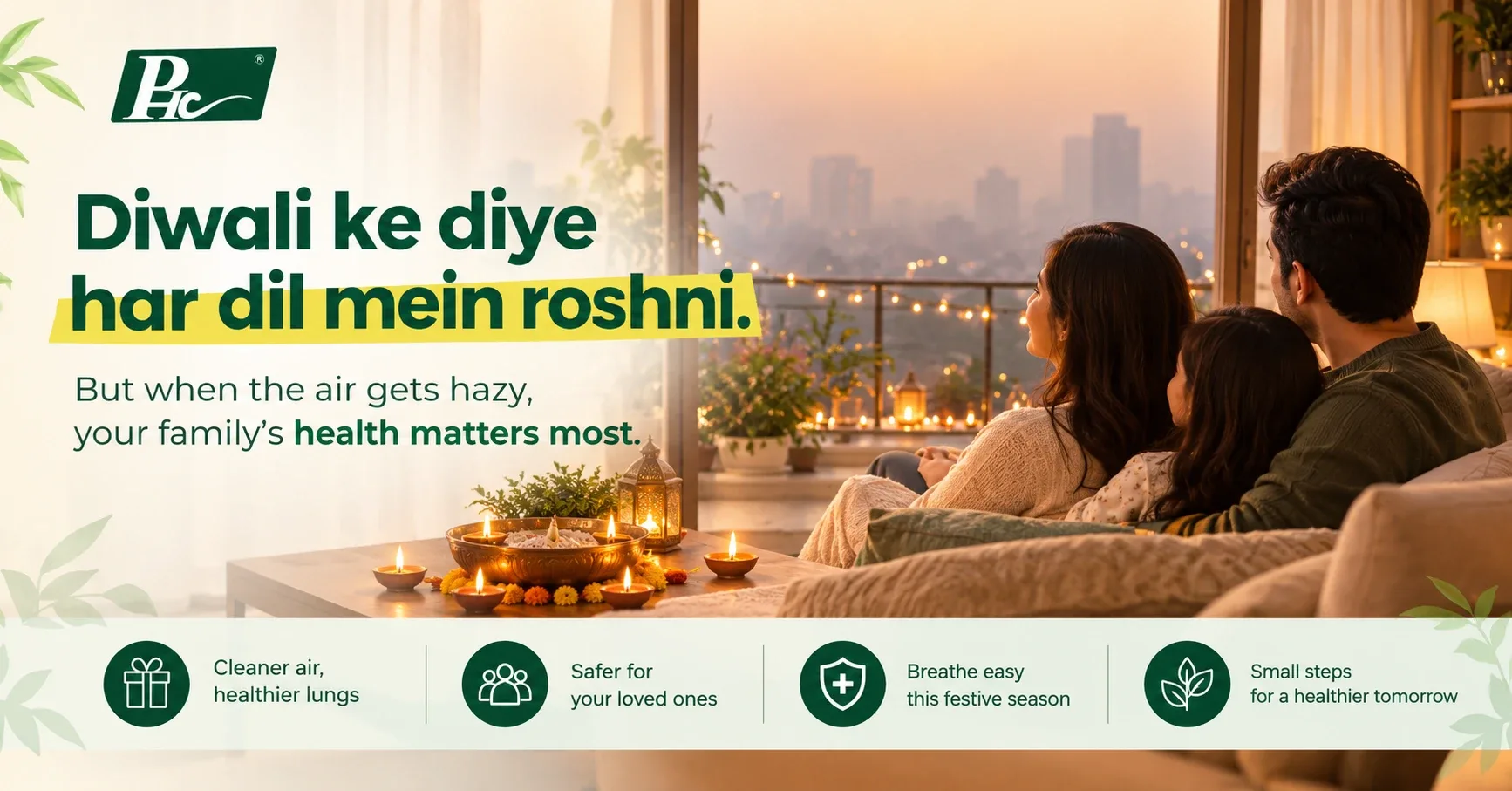
Diwali Air Pollution and Breathing Problems: Symptoms, Prevention and How Homeopathy Helps
Diwali is the festival of light, family and new beginnings. For many families in Gurugram and Delhi NCR, it also brings a familiar pattern: a scratchy throat on Diwali night, a cough that lingers into the following week, or a child who wheezes every November.
These are common Diwali air pollution breathing problems, and they deserve attention. A 2024 study of 71 monitoring stations across India found that fine particulate matter (PM2.5) rose by approximately 29–53% during Diwali compared with the preceding days between 2019 and 2022.
This guide explains why air quality worsens during Diwali, which symptoms to watch for, how to protect your family and how Panacea Homeopathic Clinic (PHC) approaches recurring seasonal respiratory complaints.
Why Does Air Quality Worsen During Diwali?
Air quality worsens during Diwali because firecracker smoke adds fine particles and gases to the atmosphere. Cooler, calmer air during the beginning of winter can trap pollutants close to the ground, allowing smoke to linger.
Research has also found that post-Diwali PM2.5 levels can remain significantly elevated compared with pre-Diwali levels. PM2.5 particles are particularly concerning because they are small enough to travel deep into the lungs.
For families in Gurugram and Delhi NCR, checking air quality and reducing exposure during periods of heavy pollution are important preventive steps.
What Does the AQI Number Mean for Your Breathing?
India's Air Quality Index (AQI) helps people understand the potential health impact of air pollution.
| AQI | Category | Likely health impact |
|---|---|---|
| 0–50 | Good | Minimal impact |
| 51–100 | Satisfactory | Minor breathing discomfort in sensitive people |
| 101–200 | Moderate | Breathing discomfort in people with lung disease, asthma or heart disease |
| 201–300 | Poor | Breathing discomfort for many people during prolonged exposure |
| 301–400 | Very Poor | Increased risk of respiratory illness during prolonged exposure |
| 401–500 | Severe | Health effects can affect healthy people and seriously impact those with existing conditions |
Check local air quality using the CPCB Sameer app before planning outdoor activities.
Symptoms of Diwali Air Pollution Breathing Problems
Air pollution can irritate the eyes, nose, throat and airways. Symptoms may begin during Diwali or appear in the days that follow.
Common symptoms include:
- Burning, watery or red eyes
- Runny or blocked nose and sneezing
- Sore or scratchy throat
- Dry or persistent cough
- Wheezing or difficulty breathing
- Chest discomfort
- Headache or giddiness
Pollution can also worsen existing asthma, bronchitis and chronic obstructive pulmonary disease (COPD).
If symptoms persist, worsen or include breathing difficulty, seek medical advice rather than relying on home remedies alone.
Who Needs Extra Care During Diwali?
Some people are more vulnerable to the effects of polluted air and should plan their precautions in advance.
These include:
- Children, especially those under five
- Older adults
- Pregnant women
- People with asthma, COPD or allergies
- People with heart disease or a history of stroke
- Outdoor workers, including traffic police, drivers and construction workers
If a family member belongs to one of these groups, monitor the AQI and limit their exposure during high-pollution periods.
When Should You Seek Urgent Medical Help?
Severe breathing symptoms can be an emergency. Call 112 or go to the nearest hospital immediately if anyone experiences:
- Severe breathlessness or difficulty speaking in full sentences
- Chest pain or pressure
- Bluish or grey lips or fingertips
- Wheezing that does not settle with their prescribed reliever inhaler
- Confusion, fainting or unusual drowsiness
- Firecracker burns or suspected smoke inhalation
Do not delay emergency treatment while trying home remedies or any complementary treatment.
How to Prevent Breathing Problems During Diwali
The most effective way to reduce the effects of polluted air is to limit exposure. The following practical steps can help protect your family.
1. Limit Outdoor Exposure
Stay indoors as much as possible on high-pollution days, particularly on Diwali night and during the following days.
Move morning walks and exercise indoors when air quality is poor. If you need to ventilate your home, the NCDC advisory suggests considering the midday period, between 12 pm and 4 pm.
2. Use a Properly Fitted Mask
If you must go outdoors during heavy pollution, use a properly fitted N95 or N99 mask. Paper masks, handkerchiefs, scarves and ordinary cloth masks do not provide equivalent protection against fine particles.
3. Keep Indoor Air Cleaner
During the festival period:
- Avoid incense, mosquito coils and aerosol room fresheners.
- Wet-mop floors instead of dry sweeping.
- Set your home and car air conditioners to recirculation mode when appropriate.
- If using an air purifier, choose one that does not generate ozone.
4. Celebrate With Care
Choose diyas, decorative lights and rangoli instead of firecrackers. If crackers are used, keep them outdoors and away from people.
People with asthma or other respiratory conditions should remain indoors while firecrackers are being burst.
5. Support Your Daily Health Routine
Drink enough water, gargle with warm water after being outdoors, rinse irritated eyes with clean running water and eat fresh fruits and vegetables.
Keep prescribed medicines and inhalers within easy reach. Continue using them as directed by your doctor.
How Homeopathy Approaches Recurring Seasonal Breathing Complaints
Homeopathy is a system of medicine based on the principle of treating like with like. Classical homeopathy uses an individualised approach in which the practitioner considers the person's overall history and symptom pattern.
At Panacea Homeopathic Clinic (PHC), Gurugram, classical homeopathy has been practised since 1997. The clinic's approach to recurring seasonal complaints includes detailed case-taking, an individualised constitutional prescription, follow-up and lifestyle guidance.
It is important to understand that evidence supporting homeopathy for specific respiratory conditions remains limited. Homeopathy has not been established as an effective treatment for air-pollution injury or as a replacement for evidence-based respiratory care. Pollution precautions and appropriate medical assessment remain essential.
Why Does the Same Smoke Affect People Differently?
People can react differently to the same pollution exposure. One person may develop a dry cough at night, another may experience sneezing and a runny nose, while someone with asthma may notice wheezing.
At PHC, the consultation process considers how symptoms behave, what appears to worsen or ease them, sleep, appetite, energy levels, previous seasonal episodes, family history and current medicines.
This detailed assessment helps the practitioner understand the individual's health history and discuss an appropriate care plan.
How PHC Builds an Individualised Care Plan
PHC's consultation process includes four main steps:
- Detailed case-taking: Reviewing symptoms, triggers, medical history, previous seasonal episodes and current medicines.
- Individualised consultation: Discussing an individualised homeopathic prescription based on the consultation.
- Seasonal guidance: Providing practical guidance for the festival period and discussing what to do if symptoms change.
- Follow-up: Reviewing progress and adjusting the care plan when appropriate.
PHC also emphasises four pillars of health: diet, rest, exercise and medicine.
Responses to treatment vary between individuals. No fixed result or cure can be guaranteed.
Can You Consult PHC if You Already Use an Inhaler?
Yes, you can discuss your health concerns with PHC while continuing your prescribed treatment. Share your full medicine list during your consultation.
Do not stop, reduce or replace an inhaler or any prescribed medicine because of homeopathic treatment. Make changes only with the doctor who prescribed it.
Homeopathic consultations should not delay assessment of persistent cough, wheezing, breathlessness or chest discomfort.
When Should You Start Planning for Diwali?
Before Diwali: Check your local AQI, prepare your indoor environment and arrange a consultation if you have recurring seasonal concerns.
During Diwali week: Reduce exposure, follow air-quality advisories and continue prescribed medicines.
After Diwali: Seek medical advice if cough, throat irritation or breathing problems persist or worsen.
Throughout the year: If symptoms recur every winter, discuss a long-term management plan with a qualified healthcare professional.
Conclusion
Diwali is a time for light, family and celebration. With a little planning, you can reduce your family's exposure to polluted air and recognise warning signs early.
Check the AQI, limit outdoor exposure on high-pollution days, use a properly fitted N95 or N99 mask when needed, keep indoor air cleaner and seek prompt medical attention for concerning symptoms.
For people experiencing recurring seasonal complaints, Panacea Homeopathic Clinic offers individualised homeopathic consultations alongside lifestyle guidance and follow-up. This care should complement, not replace, appropriate medical treatment and proven exposure-reduction measures.
Book Your Pre-Diwali Consultation With PHC
Panacea Homeopathic Clinic has offered classical homeopathy in Gurugram since 1997, with online consultations available since 2001.
Clinic: Sector 22A, near Tau Devi Lal Park, GurugramClinic hours: 9 am–9 pm, by appointmentPhone: 0124 403 7136WhatsApp: +91 97183 73737
Book an appointment at the Gurugram clinic or enquire about an online consultation.
Medical disclaimer: This article is for health awareness and does not replace a personal medical assessment. In an emergency, call 112.
Questions people ask
Why do I cough after Diwali?
Firecracker smoke increases fine particulate matter (PM2.5), which can irritate the throat and airways. Cooler weather can also allow pollution to linger. People with sensitive airways, asthma or allergies may be particularly affected.Copy answer
What are the common symptoms of Diwali air pollution?
Common symptoms include burning or watery eyes, a runny or blocked nose, sore throat, cough, wheezing, chest discomfort, headache and giddiness.
How does PHC use homeopathy for pollution-related breathing problems?Copy question
PHC offers detailed case-taking, personalised homeopathic consultations, seasonal wellness guidance, and regular follow-ups, complemented by advice on diet, rest, and exercise to support overall well-being. For pollution-related breathing problems, homeopathic care can be considered as a complementary approach alongside appropriate medical care and evidence-based treatments.
Can I consult PHC if I already use an inhaler?
Yes. You can consult PHC while continuing your prescribed inhaler and other medicines as directed. Share your medicine list, and make changes only with the doctor who prescribed them.
When should I see a doctor urgently for breathing problems during Diwali?Copy question
Seek emergency care for severe breathlessness, chest pain, bluish lips, confusion or wheezing that does not settle with your prescribed reliever inhaler. Call 112 or go to the nearest hospital.
Does a cloth mask protect against Diwali smoke?
Ordinary cloth masks, paper masks, scarves and handkerchiefs do not provide equivalent protection against fine particles. A properly fitted N95 or N99 mask is recommended when outdoor exposure cannot be avoided.
How can I protect my child's lungs during Diwali?
Keep children indoors on high-AQI days, avoid firecrackers near them, reduce indoor smoke and use a properly fitted, age-appropriate respirator when needed. Seek urgent medical care if a child struggles to breathe.